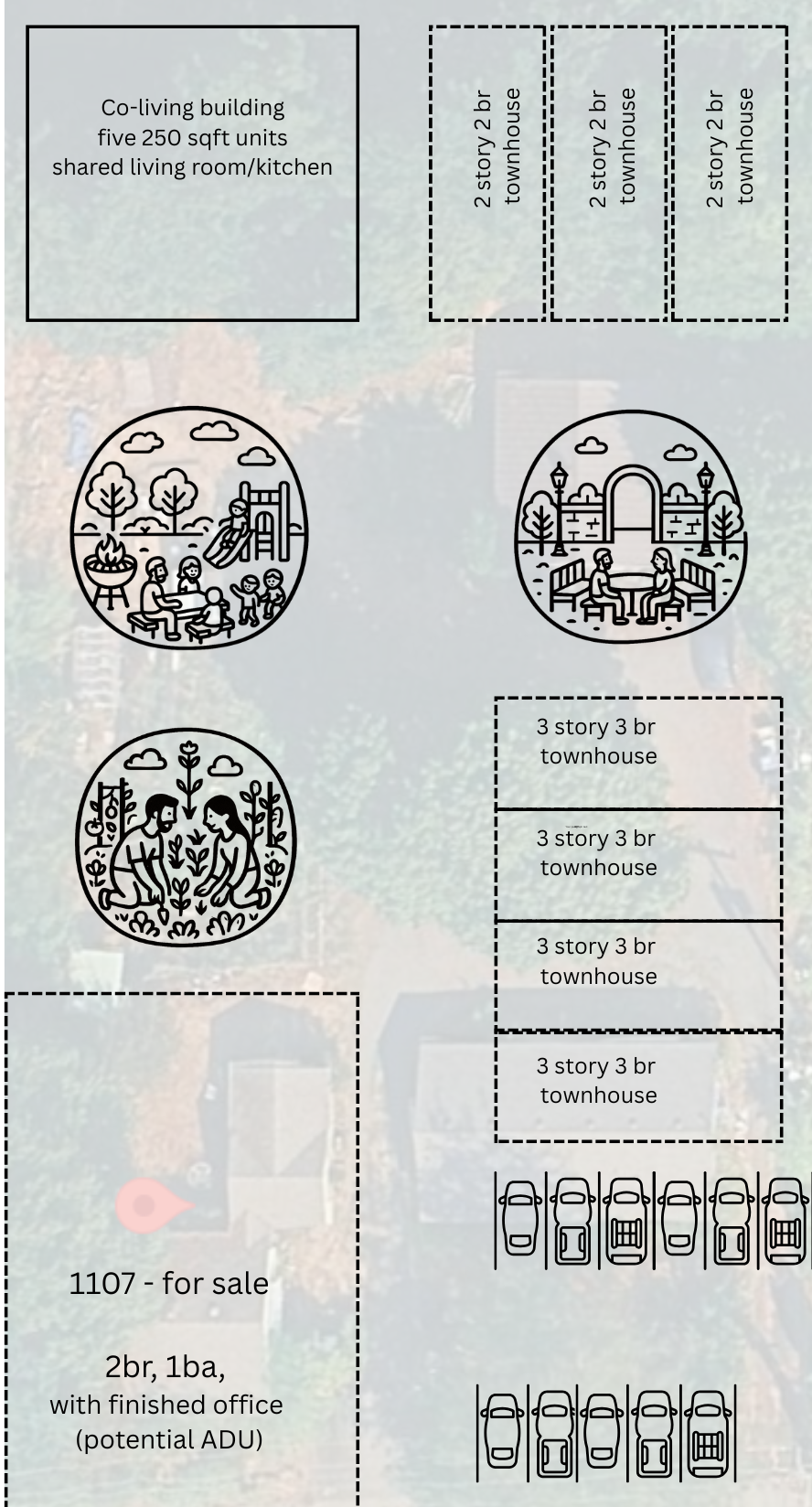
A rooted neighborhood for people care about good living, good neighbors, and shared abundance.
A Village Grown From Stronger Roots
Black Locust Village is a small cluster of homes, gardens, and shared community spaces on Vancouver’s historic Grand Boulevard. The vision remains simple: build beautiful, grounded homes for residents invested in craft, food, land, and community. The neighborhood brings together working people, small business owners, students, remote workers, young families, young adults, and long-time locals, all sharing a sense of place shaped by the Pacific Northwest.
What many don't know: Black Locust Village started with four original units built during World War II to house workers at the local shipyards. Those historic homes carry legacy and memory. Over time, the community garden and food forest have grown and supported a shared, low-spray lifestyle since 2009.
As we look ahead, the Village is evolving. In 2027, two of the original WWII-era buildings are planned to be deconstructed to make way for thoughtfully designed new homes. Future development will emphasize small-footprint homes that protect open space for community gathering, shared gardens, and food production.
Whats with the name?
Black locust trees are known for their strength and resilience. Their wood lasts for generations. Their roots enrich the soil. Their blossoms feed pollinators throughout spring. This village takes its name from that strength. It reflects the way we want this place to grow: useful, beautiful, rooted, and generous.
For Sale: 1107 Grand Boulevard at Black Locust Village
A rare chance to become the first resident owner in one of Vancouver’s longest running urban homesteads.
Price: $355,000
Built in the World War II era as housing for Kaiser shipyard workers, this two bedroom, one bath home carries the history of Vancouver’s working class and sits within Black Locust Village, a community that has grown food and shared space here since 2009. For sixteen years the garden and food forest have been tended without sprays and have fed the people who live on this land.
The Home
A simple and sturdy two bedroom, one bath home with practical updates and flexible areas.
• Tiled bathroom
• Kitchen with center island and an open layout suited for everyday cooking
• Finished office or studio room with an exposed wood ceiling that adds warmth and character
• A layout suited for couples, small families, or anyone seeking a grounded home close to the city
The Land
Residents share access to an established no-spray garden and a maturing food forest. Plantings include: Fifteen year old olive trees reaching ten feet tall, cornelian cherry, flying dragon citrus, aronia, cider apples, josta berry, cherries, perennial herbs, pollinator plants, and seasonal beds.
Around 1107 there is a private backyard, and a frontdoor patio area shaded by bamboo, along with shared outdoor spaces that have been shaped over many seasons.
Community Gathering Spaces
Black Locust Village includes a developed fire pit area used for community dinners, family gatherings, and casual evenings with neighbors. It is one of the social centers of the property. The gardens and open areas have been home to potlucks, music nights, community fundraisers, and long conversations.
Walk and Bike Friendly
The location links cleanly to both Vancouver and Portland.
• Direct access to dedicated bicycle routes that run through Fort Vancouver National Historic Site and down to the Columbia River
• A smooth ride over the Interstate Bridge into Jantzen Beach and Portland’s broader bike network
• Walkable routes through the Hudson’s Bay neighborhood and into the open lawns and trails of Fort Vancouver
• A historic cemetery a couple blocks away that is quiet, shaded, and a pleasant place for walking
Neighborhood Food and Coffee
Within a short walk or bike ride you will find:
• Afghanistan Grocery and Deli
• Paper Tiger Coffee Roasters
• Bader Beer and Wine Supply
• Sushi
• Mexican Torteria
• A mix of long established neighborhood shops
The Future of Black Locust Village
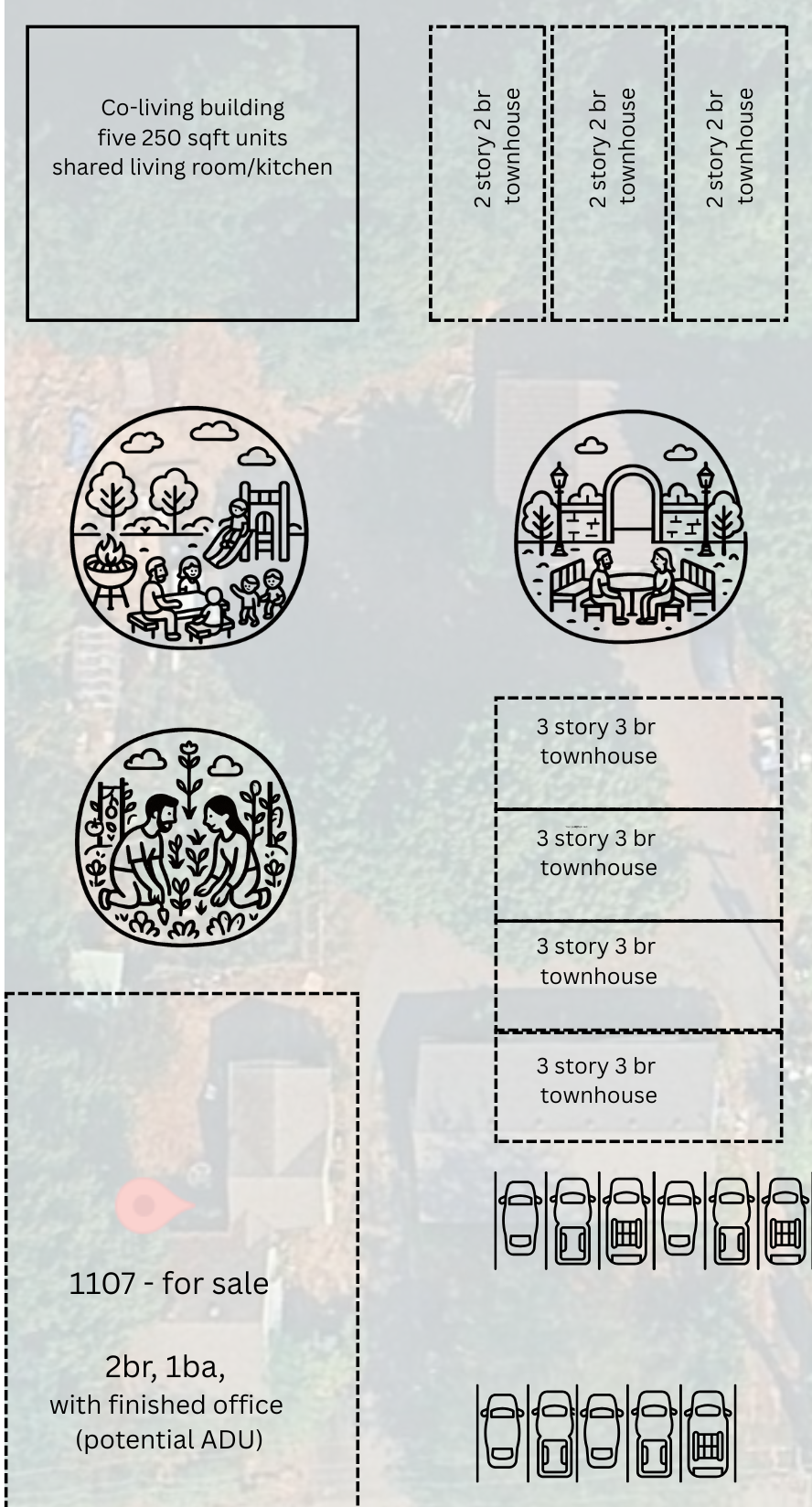
This listing is the first ownership opportunity in a multi year plan to grow the village with a mix of new homes. Upcoming units include:
• Three bedroom family sized homes
• Two bedroom units
• Studio apartments for simple and efficient living
• Shared kitchen and living room
Some will be for sale and others available for rent. The goal is a village where owners and renters live together with shared greenspace, food growing areas, and thoughtful infill that strengthens the sense of community.
If you want a home with history, neighborhood life, and food growing out the back door, this is one of the rare places where all three meet.
Contact for details or to schedule a visit:
360-771-1296, or mail@warrenneth.com
Photos coming soon!
Future Residential Opportunities
Carefully phased, community-first growth
Black Locust Village is entering its next chapter. Two of the original WWII-era buildings will be thoughtfully deconstructed in 2027, making room for new homes that build lightly on the land. Future development centers on small-footprint housing that preserves open space for gardens, gathering, and food production.
The next phase of homes will feature:
Compact, efficient building footprints that allow most of the land to remain open and green.
Shared community gardens and edible landscapes, expanding the fifteen-year food-forest tradition already on site.
Dedicated outdoor gathering spaces, including a community fire ring, shaded seating, and flexible commons for events.
Climate-friendly, low-VOC materials selected for durability, indoor air quality, and reduced environmental impact.
Committed use of burnt cedar siding as the primary exterior material, reflecting regional craft and resilient design.
A mix of studios, two-bedroom, and three-bedroom homes, all grounded in a village model that values space for people and plants over pavement.
Street-based parking for all units to keep the interior of the village open, walkable, and community-centered.
Enhanced bike parking and secure storage, supporting car-light living and easy access to nearby trail networks.
Join the waitlist for units for sale or rent: mail@warrenneth.com